
BOOKS
& eBOOKS
DATABASES /
SCHOLARLY ARTICLES
FULL TEXT
eJOURNALS
THIS SITE /
ON THE WEB

Resources by Discipline

Databases & Scholarly Articles | Subject Guides | eJournals | New Library Resources | Career & Professional Resources | Library Instruction

Special Collections


Virtual Reference


Entertainment & Leisure Resources

Search Quest

In-depth research tutorial.

LAUNCH SEARCHQUEST

Ask a Librarian

Have a question?

Get help online from a reference librarian.

Ask
IDS

Have a question about an online course?

Get help from a designer.

Features

Book of the Week

The matter of the gods: religion and the Roman Empire

The matter of the gods: religion and the Roman Empirematter_of_the_gods

by Clifford Ando

What did the Romans know about their gods? Why did they perform the rituals of their religion, and what motivated them to change those rituals? To these questions Clifford Ando proposes simple answers: In contrast to ancient Christians, who had faith, Romans had knowledge, and their knowledge was empirical in orientation. In other words, the Romans acquired knowledge of the gods through observation of the world, and their rituals were maintained or modified in light of what they learned. After a preface and opening chapters that lay out this argument about knowledge and place it in context, The Matter of the Gods pursues a variety of themes essential to the study of religion in history.

Libraries Spotlight

Featured Database: Sanborn Insurance Maps

Go to Sanborn Insurance Maps

SanbornĀ® fire insurance maps are detailed property and land-use records covering more than 12,000 U.S.towns and cities. Founded in 1867 by D. A. Sanborn, the Sanborn Map Company was the primary American publisher of fire maps for over 100 years, repeatedly mapping towns and cities as they changed.

The maps provide a wealth of information, such as building outline, size and shape, construction materials, height, building use, windows and doors, street and sidewalk widths, boundaries, house numbers, and more. The plans often include information and shading for steel beams or reinforced walls, plus symbols for stables, garages, warehouses, etc.

Factories are labeled with the owner’s name, as well as the products manufactured there. In large industrial and commercial buildings, even individual rooms and their uses are recorded. Also depicted are pipelines, railroads, wells, water mains, dumps, and heavy machinery likely to affect the property’s vulnerability to earthquake, fire, and flood.

UDM has access to Michigan maps only.

University of Detroit Mercy logo

Locations

McNichols Campus Library
Today's Hours: 8:00 - 4:00 [ALL]
Reference Desk: (313) 993-1071
Circulation Desk: (313) 993-1795
Location

Dental Library
[Restricted Access]

Today's Hours: 10:00 - 5:00 [ALL]
Reference Desk:(313) 494-6900
Circulation Desk: (313) 494-6902
Location

Instructional Design Studio
Today's Hours: CLOSED [ALL]
Phone: (313) 578-0580
Location

Chat requires JavaScript.

Around the libraries ...

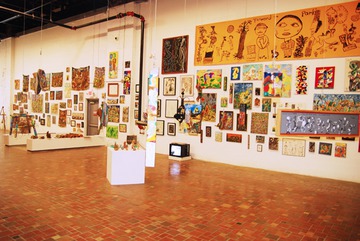
Image from around the McNichols campus library